
Sobriety in Practice
30 days of turning what you know into what you do: learn your patterns, practice new responses, and build a life that supports staying sober.
You can stop drinking temporarily, but how do you make it stick?
You get some time. You start feeling better. Then a stressful week, a social event, or the thought that “maybe it’ll be different now” pulls you back into negotiating with yourself.
It’s exhausting to keep making the same decision, and wondering why you can’t follow through when you meant it so much.
Sobriety in Practice is a 30 day program for people who are ready to get out of the back-and-forth and practice the skills that support staying sober long term.
You’ll work through short daily lessons and practical exercises, with an optional private coaching call at the beginning and end to help you apply what you’re learning to your life.
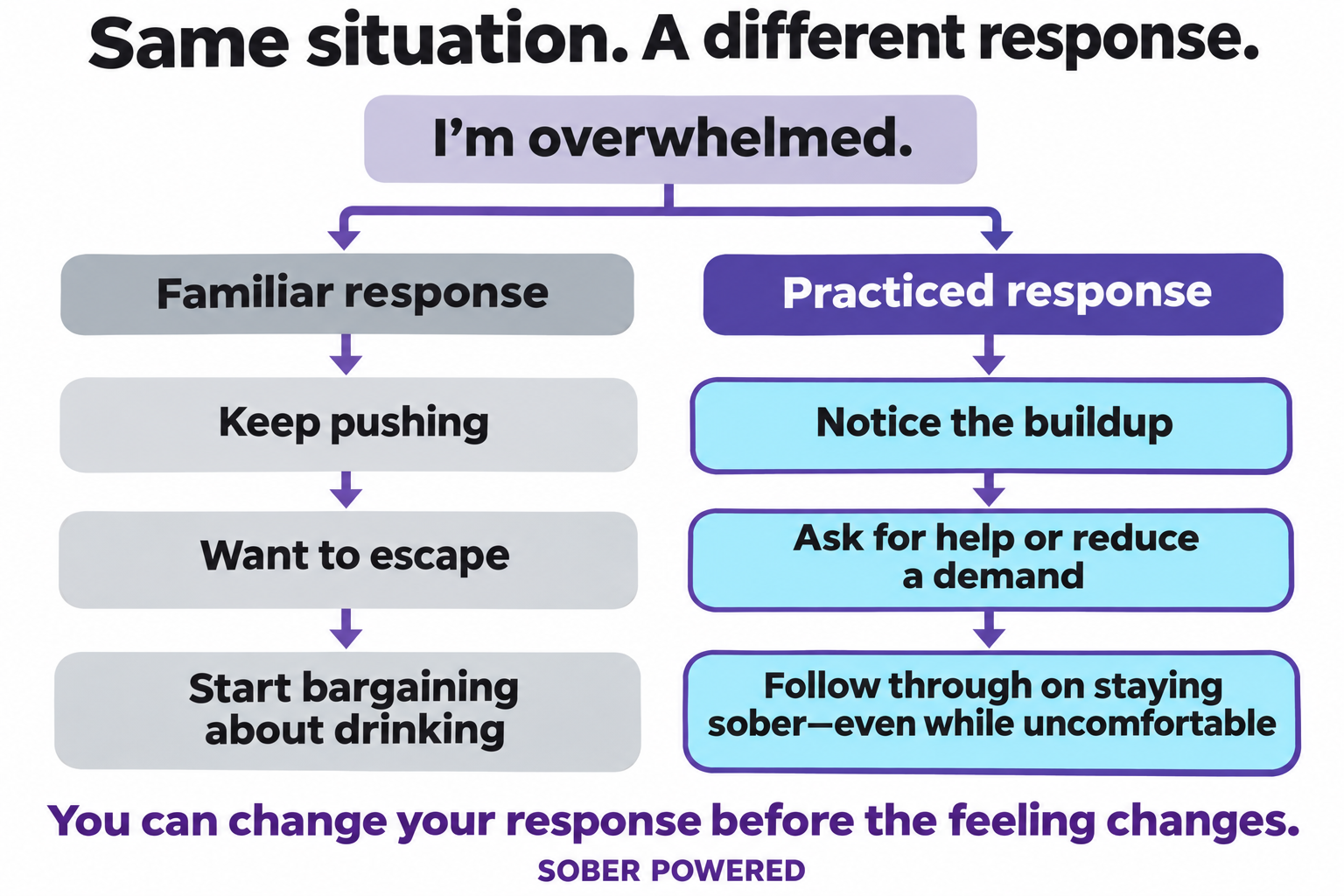
What will be different this time?
You can remove alcohol and still finish every day overwhelmed, resentful, or desperate for a break.
You can understand why you drink and still struggle to ask for help, set a boundary, or get through an evening when nothing sounds enjoyable.
When those situations remain difficult, alcohol can start sounding like the answer again.
During these 30 days, you’ll identify what you’ve been expecting alcohol to do for you, and practice other ways to respond. You’ll learn to notice the buildup earlier, handle uncomfortable feelings, and follow through even when you don’t feel motivated.
The goal is to have something more useful than “I’ll try harder” when things get difficult.
You don’t need to feel confident about every future situation. This program is for you if you’re ready to work toward staying sober and willing to practice a different approach. It isn’t a program for learning to moderate.
One email. One focused practice. Each day.
Each email includes a short lesson and a reflection or action to help you apply it.
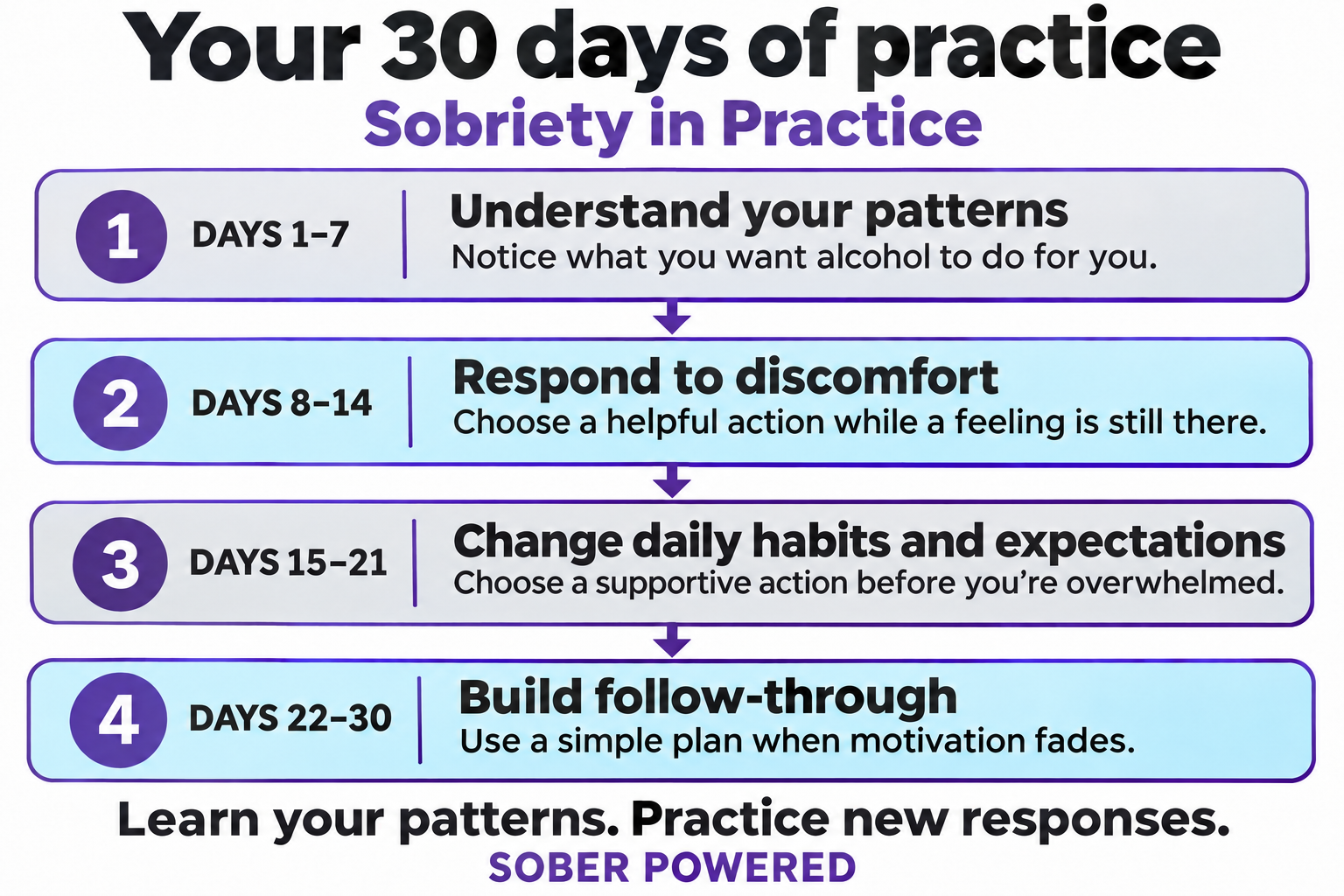
You’ll work through four areas:
Understand what keeps pulling you back. Identify the jobs you’ve given alcohol, recognize your patterns, and notice when a difficult feeling turns into bargaining about drinking again.
Respond to discomfort differently. Practice separating feelings from actions, naming what’s happening, and choosing strategies you’re actually willing to use when you want a drink.
Address what makes escape appealing. Work on rest, resentment, boundaries, boredom, and asking for support. Make practical changes to the situations you’ve been trying to drink through.
Build follow-through. Prepare for hard days, recognize drift, and learn to return after something doesn’t go well. Bring your learning together into a personal sobriety guide and a plan for the next month.
You’ll practice with situations from your own life: saying no and tolerating disappointment, resting while something remains unfinished, or telling someone you’re tempted before you’ve already decided to drink.
Choose the option that fits you
Note: FAQs are towards the bottom of this page. If you have any questions you can email me at gill@soberpowered.com
Self-Guided $99
For you if you want a clear daily structure and prefer to work independently.
Includes:
30 daily educational emails.
A focused reflection, prompt, or skill to practice each day.
Step by step guidance to create your personal sobriety guide to use after the 30 days is over.
A final exercise to choose your priorities and support for the next 30 days.
You receive the complete program.
With Personal Coaching — $497
For you if you want help understanding where you get stuck and applying the lessons to your situation.
Includes everything in Self-Guided, plus two private coaching calls with me:
Beginning call: Understand your pattern (45 minutes)
We’ll talk through what happens when you get some sober time and then return to drinking. Together, we’ll identify the situations, expectations, and responses to focus on during the program. You don’t need to figure yourself out before we meet.
Ending call: Work out what comes next (30 minutes)
We’ll review what helped, where you’re still struggling, and what needs adjusting. We’ll use your personal sobriety guide to choose practical next steps and identify the support you’ll need going forward.
What can you expect from 30 days?
You may still have cravings. Some situations may still feel uncomfortable.
The work is learning to recognize what’s happening and respond with more than the familiar choice to drink. That could mean noticing your resentment before you’re desperate to check out, keeping a boundary even when you feel guilty, or reaching out instead of disappearing when you struggle.
By the end, you’ll have worked toward a clearer understanding of your patterns, specific responses to practice, and a personal guide you can return to on difficult days.
You’ve practiced taking breaks. Now give yourself time to practice what comes after the decision to quit.
FAQS
-
How is this course delivered?
This is an email course that will be delivered to your inbox daily. Each lesson includes exercises to reinforce the concepts.
-
How long will I have access to this course?
Forever
-
How much time will I need to commit?
This course is designed to make you think, so you can change the way you think. You should devote as much time is required to deeply think through the material.
-
Will this course get me sober?
While it would be amazing if this course could get everyone sober immediately, I cannot make that guarantee. Instead, even if you do slip or relapse, you will have gained the tools to analyze it, learn from it, and prevent it from becoming just another “data point”
-
What is your refund policy?
Please review the program details and sample lesson before purchasing. All sales are final, and refunds aren’t offered for changing your mind, not completing the lessons, or choosing not to use included coaching calls. Coaching calls must be scheduled within 90 days of purchase.
Sample Lesson
Day 8: Emotions are not instructions
You can decide that you’re not drinking and still want a drink. You can set a reasonable boundary and feel guilty afterward. You can know a meeting would help and still feel anxious enough to want to skip it.
Sometimes we expect a helpful choice to come with a feeling that confirms it. When we feel guilty, embarrassed, or reluctant instead, we question the decision: “If this is good for me, why does it feel so uncomfortable?”
A feeling can be real without being a reliable instruction about what to do next.
Imagine you tell a friend you can’t attend an event where you expect a lot of drinking. You feel comfortable with your decision until they say they’re disappointed.
Now you feel guilty. You think, “Maybe I’m being selfish. Maybe I should just go.”
Changing your answer might relieve that guilt. But before you do, ask: “Is there new information that changes my decision, or am I trying to get rid of the feeling that followed it?”
You can care about your friend’s disappointment and still prioritize your sobriety. You could say, “I’ll miss seeing you too. Can we get lunch next week?” You’ve acknowledged the relationship and kept your boundary, even if you still feel guilty.
This is what it means to practice emotions are not instructions: notice the feeling and what it’s pulling you to do, then choose your response.
Emotions can give you useful information. Anger might draw your attention to unfair treatment. Loneliness might point to a need for connection. Guilt might prompt you to consider whether you owe someone an apology.
But the feeling alone doesn’t settle what happened or what you should do. Feeling guilty doesn’t automatically mean you did something wrong. Feeling anxious doesn’t necessarily mean you need to cancel. You can examine the situation before acting.
In sobriety, this matters because feelings can quickly become reasons to drink:
“I’m stressed, so I need a drink.”
“I feel left out, so I should join in.”
“I’m bored, so I might as well drink.”
Each statement moves directly from a feeling to a response. Today, you’ll practice putting a choice between them.
“I feel __________.”
“Feeling __________ doesn’t mean I have to __________.”
“Instead, I will __________.”
For example: “I feel embarrassed about asking for support. Feeling embarrassed doesn’t mean I have to keep this to myself. Instead, I will tell someone I’m having a difficult evening.”
You may still feel embarrassed while sending the message. The practice is taking a helpful action without requiring the feeling to disappear first.
That action should fit the situation. Sometimes it means attending despite feeling nervous. Sometimes it means leaving because staying is making it harder to remain sober. Consider what supports your needs and your decision.
Today’s reflection and practice
Choose one manageable situation where a feeling pulls you toward a response you want to change. Complete the three sentences above with an action you can take today.
For example:
“I feel guilty about resting while there are chores to do. Feeling guilty doesn’t mean I have to finish everything first. Instead, I will take the break I planned.”
Or:
“I feel frustrated that I still want a drink. Feeling frustrated doesn’t mean I have to give up on tonight. Instead, I will tell someone I’m tempted and ask them to check in with me.”
Take the action, then ask: “Was I able to do something helpful while I still felt uncomfortable?”
That counts as practicing the skill, even if your mood hasn’t changed yet. You’re building emotional sobriety.